
Despite markets turning volatile, share sale activity at India Inc has surged to its highest level in five months. So far in March, promoters, strategic investors and other large shareholders have been able to offload shares worth more than Rs 33,000 crore-the most since November-defying uncertain market conditions. Both the Sensex and the Nifty are on course to post their fourth straight monthly loss amid headwinds, such as interest rate tightening by the US Federal Reserve and the global banking crisis.
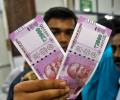
By the end of March 2022, only 2,140 million pieces of Rs 2,000 denomination currency notes were in circulation, or 13.8 per cent of the total value of notes.
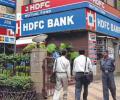
The Reserve Bank of India is likely to take a call on the relaxations sought by HDFC Bank in relation to the merger, as the date of merger draws closer, sources said. The HDFC twins, which announced their decision to merge in April last year, received National Company Law Tribunal's (NCLT's) approval recently - a key milestone to close the deal in due time. The management of both the entities had said that it will take 15-18 months for the merger.

The filing of offer documents with the capital markets regulator - Securities and Exchange Board of India - has more than halved this financial year (2022-23, or FY23) as the outlook for new share sales has worsened, following correction in the secondary market. So far in FY23, 66 companies filed their draft red herring prospectus (DRHP), as opposed to 144 in the preceding financial year (2021-22, or FY22).

The recent run on the US-based Silicon Valley Bank (SVB) and the subsequent seizure of its assets by the regulators may have sparked a global wave of risk aversion, particularly for start-ups. However, the Indian banking sector is unlikely to be a victim of any contagion effects, said analysts. he bank, which played a big role in financing start-ups and technology players, faced stress after incurring huge losses on its holdings of US bonds, following the most-aggressive monetary tightening cycle by the Federal Reserve in around four decades.

Heightened volatility and lacklustre returns continue to make a dent in retail participation in the equities cash market segment. The percentage of retail participation in the average daily turnover in the National Stock Exchange's (NSE's) cash segment has come down to 40.8 per cent in February 2023, from 52 per cent a year ago. At the peak, retail investors accounted for nearly two-thirds of cash market volumes in July 2020.

Financial services and consumer durable companies accounted for most of the selling by foreign portfolio investors (FPI) in the last fortnight of February. FPIs sold finance stocks worth Rs 2,263 crore and consumer durable stocks worth Rs 1,111 crore, according to data collated by Prime Infobase. Information technology (selling worth Rs 708 crore), metals and mining (Rs 694 crore), and power (Rs 497 crore) were the other sectors where overseas funds sold shares.

The Securities and Exchange Board of India's (Sebi's) proposal to re-introduce "hard underwriting" is seen as step to boost India's moribund initial public offering (IPO) markets. The regulator has proposed that in case an IPO fails to garner full subscription, the investment banker or a third-party can buy the unsubscribed shares. This practice was common during fixed-price issues prior to 1999. However, under the new book building regime, underwriting is allowed only to the extent of shortfall due to technical rejection of bids - this is referred to as "soft underwriting" and is rarely invoked.

'Citibank customers will migrate to the Axis Bank platform over 18 months.'

There seems to be no respite for Adani Group companies from the market carnage. All 10 stocks belonging to the conglomerate came under a fresh bout of intense selling pressure on Wednesday as the group's debt levels and repayment capabilities continued to plague investors. Analysts said investors are also concerned about whether the group will be able to maintain its pace of growth, given the current turmoil that has wiped out over Rs 12 trillion in market capitalisation (m-cap) since the start of the year.

Indian Bank expects recoveries to be more than slippages in this financial year, which will result in improved asset quality.

The rout in Adani Group stocks after US-based short seller Hindenburg Research released a report on January 24 has sparked a rebound in trading activity this month. The average daily trading volume (ADTV) for the cash segment (both NSE and BSE combined) so far in February stands at Rs 59,346 crore, and is around 15 per cent more than the previous month's tally of Rs 51,844 crore, which was the lowest in six months. The ADTV for the futures and options (F&O) segment rose to a record Rs 204 trillion (notional turnover) against Rs 202 trillion in January.

Reminiscent of the past two years, the market has made positive strides ahead of the Union Budget 2023-24 (FY24). The benchmark National Stock Exchange Nifty has gained 1.8 per cent in the last month. Typically, markets tend to gain ahead of the Budget as investors build in optimism.

The share of listed public sector undertakings (PSUs) in the overall market capitalisation has hit a three-year high of 11.4 per cent. This comes on the back of the sharp outperformance of the PSU pack over the past two years. In 2021 and 2022, the BSE PSU index gained 41 per cent and 23 per cent, respectively. Market participants said a combination of factors like value buying and bullishness, particularly in public sector banks (PSBs), were the reason for the improved prospects.

The Indian rupee is expected to trade between 80 and 84 against dollar in the first three months of 2023 with support from overseas inflows though worsening current account deficit (CAD) and reduced interest rate differential between the US and India pose challenges. According to a Business Standard Poll of 10 participants, most said the rupee could gain strength in January due to foreign inflows, and the Reserve Bank of India (RBI) is not expected to allow the currency to depreciate ahead of the Union Budget scheduled on February 1. The rupee depreciated 10.15 per cent in 2022, its worst performance since 2013 as the war in Europe and the interest rate increase by the US Federal Reserve prompted investors to flee emerging markets.

'Given the worries about sluggish growth, rising interest rates and likely volatility, it's quite logical to infer that the SIP route could be the preferred way of investing.'

Cash trading volume declined in 2022, even as benchmark indices outperformed their peers. The average daily trading volume (ADTV) for the cash segment fell 18 per cent year-on-year to Rs 61,392 crore (NSE and BSE combined). The ADTV for the futures and options (F&O) segment (NSE and BSE combined) stood at Rs 125 trillion (notional turnover), up 117 per cent from the previous year.

The turmoil in the markets has been cited as the reason for the dip in the IPO market.

The year 2022 saw the Reserve Bank of India (RBI) start acting on the policy repo rate after a gap of two years. The six-member monetary policy committee of the RBI reduced interest rate sharply - by 115 bps - when Covid-19 struck in 2020. In March 2020, days after the nationwide lockdown was announced, MPC in an unscheduled meeting reduced the repo rate by 75 bps, followed by another 40 bps in May. Status quo was maintained for the next two years since the May repo rate hike.

At the 45th Annual General Meeting of Reliance Industries (RIL) in August, chairman and managing director (CMD) Mukesh Ambani described the company as an "unputdownable book" with never-ending chapters of success. "Reliance grew from strength to strength because we internalised the founder's mindset of purpose, philosophy and passion," he said. Wednesday marked the 90th birth anniversary of RIL founder Dhirubhai Ambani.
 © 2026 Rediff.com - Investor Information - Advertise with us - Disclaimer - Privacy Policy - Sitemap - Feedback - About us - Terms of use - Grievances